
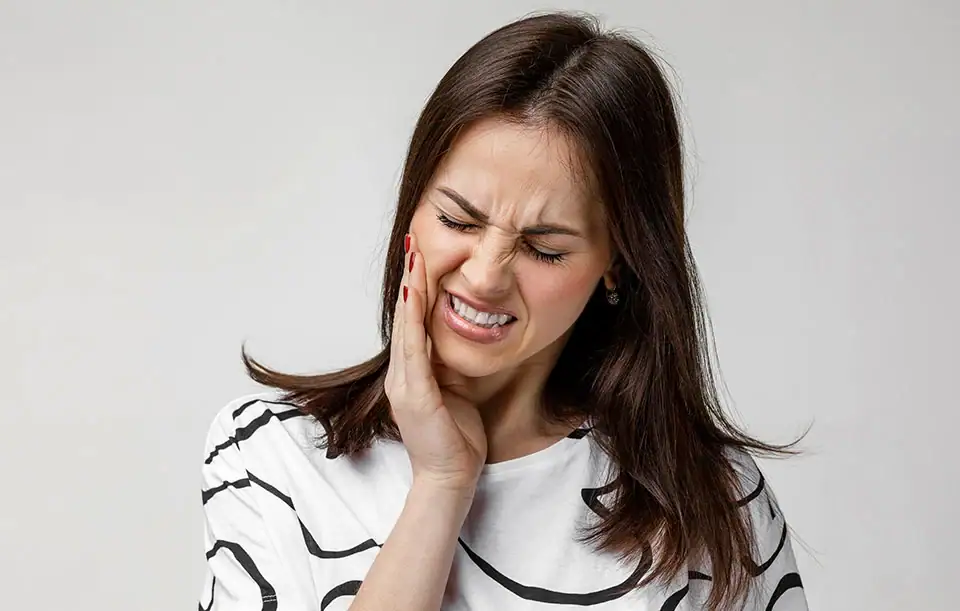
Fine all day, then your tooth starts pounding the moment your head hits the pillow? The reason your tooth throbs at night is often a problem inside the tooth, such as deep decay or an infection, rather than a passing irritation.
An emergency dentist, who treats urgent problems, can find the source and relieve the pain. Knowing why the pain peaks at bedtime helps you decide how quickly to call.
Quick Answer
A tooth throbs at night because quiet makes pain feel louder, and lying flat may raise pressure inside an inflamed tooth. The cause is often deep decay or an infection in the tooth. A dentist can find the source, so call promptly, and go to the emergency room for spreading swelling, fever or trouble breathing.
Key Takeaways
- Throbbing that returns every night often signals decay or infection reaching the center of the tooth.
- An abscess is a pocket of pus caused by bacterial infection in or around a tooth.
- Pain that fades on its own does not mean the infection has cleared and stopped spreading.
- Warm saltwater rinses and over-the-counter pain relievers can ease a toothache while care is arranged.
- Go to the emergency room for spreading facial swelling, fever, or trouble breathing or swallowing.
Why Does a Toothache Feel Worse at Night?
A toothache feels worse at night partly because nothing else is competing for your attention. Work, errands and conversation crowd out a dull ache, and once the room goes quiet the same pain feels louder.
Lying flat may add a physical reason. When you recline, more blood may reach the head, and an inflamed tooth has little room to swell, so pressure inside it can build. The pain can then feel like a pulse, which is why it is described as throbbing.
What Is Going On Inside the Tooth?
Throbbing often means bacteria have reached the soft center of the tooth, called the pulp. Enamel normally keeps bacteria out. According to MedlinePlus, a tooth abscess may form when decay opens a path through the enamel, or when a tooth is broken, chipped or injured in other ways. Bacteria then infect the pulp, and the infection can spread from the root to the bone that supports the tooth.
The result is a buildup of pus and swelling inside a space with nowhere to expand. That trapped pressure is a likely source of the deep, pulsing pain. Biting down on the tooth or tapping it often makes the pain worse.
What Other Symptoms Point to an Infection?
An abscess can bring other symptoms along with the throbbing. MedlinePlus lists a bitter taste in the mouth, breath odor, fever, pain when chewing and sensitivity to hot or cold. A bump on the gum that looks like a pimple is another possible sign.
Swollen glands in the neck can appear as well. If your upper or lower jaw swells, treat it as serious and call a dentist right away. Mention every symptom you have noticed to the dentist, including a fever or a bitter taste.
What Can Help Until a Dentist Sees the Tooth?
Home care buys comfort, not a cure. Warm saltwater rinses may help ease the pain, and over-the-counter pain relievers may relieve both the ache and a fever. A cold compress on the cheek may also help with swelling.
One caution applies. MedlinePlus advises against placing aspirin directly on the tooth or gums, since it irritates the tissue and can cause mouth ulcers.
How Is a Throbbing Tooth Treated?
Treatment aims to cure the infection, save the tooth if possible and prevent complications. A dentist examines the teeth and gums, may tap on the tooth to find the painful one and may use dental X-rays to locate the source.
The plan depends on the findings. Antibiotics may be prescribed to fight the infection, and a root canal may be recommended to save the tooth. A severe infection can mean removing the tooth or draining the abscess with surgery, and some people are admitted to the hospital. Prompt treatment cures the infection in most cases, and the tooth can often be saved.
When Does a Throbbing Tooth Become an Emergency?
A throbbing toothache that does not go away, or a pimple-like bubble on the gums, is reason enough to contact a dentist promptly. Facial swelling or a swollen jaw raises the urgency.
Go to the emergency room for facial swelling that spreads toward the eye or neck, a fever, or trouble breathing or swallowing. Untreated abscesses can get worse and lead to life-threatening complications, because the infection can spread to the jaw bone, to soft tissue and to other parts of the body. That risk is why persistent tooth pain deserves prompt attention rather than another dose of painkillers.
Frequently Asked Questions
Can a throbbing tooth go away on its own?
The toothache may stop when pressure inside the tooth eases, but the infection can stay active and keep spreading. A quiet night after several bad ones can feel like recovery, yet the tooth still needs a dentist to find the cause.
Can I take pain relievers for a throbbing tooth?
Over-the-counter pain relievers may ease both the ache and a fever, and warm saltwater rinses may help. They only buy comfort until a dentist treats the cause. Aspirin should not be placed directly on the tooth or gums, since it irritates the tissue.
What else can cause a throbbing tooth besides a cavity?
Deep decay is one possible cause. A broken, chipped or injured tooth can also let bacteria reach the pulp and form an abscess. Only an exam and X-rays can show which problem is behind the pain, which is why a dentist should look at the tooth.
Related Reading
- Can a Tooth Infection Spread? The Dangers of Untreated Dental Abscesses
- How Can an Emergency Dentist Save My Tooth?
About the Author
This post was reviewed by Dr. Lawrence Fealy, DDS, a dentist who earned his dental degree at Emory University. He completed dental implant residency training at Loma Linda University and sleep apnea residency training at UCLA, and is a member of the American Dental Association.
Pain at Night Is Information
A tooth that pounds after dark signals that something inside it needs treatment. Decay, a crack or an infection is unlikely to heal on its own. Getting the cause diagnosed early gives an emergency dentist the best chance of saving the tooth and relieving the pain.
- If you want to learn more about urgent tooth pain, visit our Emergency Dentist in Valencia, CA, page or schedule a consultation.